2026 ReCARDO Research Award Request for Applications
| Release Date | April 15, 2026 |
| Information Session | May 15, 2026 |
| LOI Due Date | May 30, 2026 |
| Notification of LOI | June 7, 2026 |
| Full Application Due Date | June 30, 2026 |
| Award Notification | Late August 2026 |
| Earliest Project Start Date | September 1, 2026 |
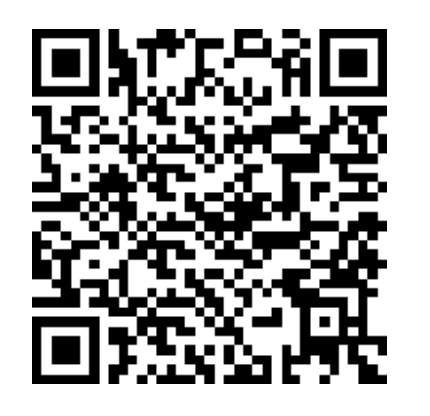
To apply, visit the submission site (https://tinyurl.com/4vt42nu5) or scan the QR code.
Program Overview
The ReCARDO Research Network is a national collaborative initiative funded by the National Institute on Aging (NIA) through a U24 cooperative agreement. Our mission is to advance the use of real-world data (RWD) for Alzheimer's disease and Alzheimer's disease-related dementias (AD/ADRD) research by developing common data elements (CDEs), harmonized datasets, and advanced computational tools.
The ReCARDO Research Award Program is designed to stimulate innovative research, foster new collaborations, and advance the use of RWD for AD/ADRD research that directly leverages and contributes to the ReCARDO program's core infrastructure and resources.
Key Award Details:
- Budget: Up to $100,000 in direct costs per project.
- Duration: Up to 12 months.
- Capacity: Up to ten research awards.
- Indirect Costs: Follow the applicant institution's negotiated federal rate.
Eligibility, Scope, and Focus Areas
We encourage applications from investigators at academic institutions, nonprofit research organizations, and government entities. Applicants must have a professional appointment and level of independence sufficient to serve as a Principal Investigator, as determined by their institution's policies. Trainees (e.g., postdoctoral fellows, residents) are not eligible to serve as Principal Investigators for this grant mechanism.
Successful projects should demonstrate at least one of the following topic areas:
- Development or validation of harmonized datasets or common data elements
- Application of AI, ML, or NLP methods to aging data resources
- Validation or benchmarking of analytic pipelines developed by ReCARDO
- Development of reusable computational tools or workflows
- Methods for integrating clinical, administrative, or research datasets relevant to aging
- Studies that demonstrate new use cases for harmonized data resources
- Validation or reuse of data, tools, or code produced through ReCARDO
Some focus areas for 2026 RFA include, but are not limited to, the following:
- Challenging Themes: Contributing to the development and evaluation of CDEs in Cognitive Assessment, covering both cognitive scores from EHRs and neuropsychological scores from direct patient testing.
- CDE Development Innovation: Contributing innovative approaches for addressing CDE development challenges.
- CDE Evaluation and Use Cases: Validating or benchmarking ReCARDO-developed harmonization approaches and analytic workflows.
Submission and Review Process
The application process consists of a mandatory Letter of Intent (LOI) followed by an invited Full Proposal.
Pre-application (LOI): Applicants must submit an LOI with basic application information and a high-level summary (up to 500 words) including the problem addressed and proposed approach, feasibility demonstration, description of how the work contributes or leverages ReCARDO resources (e.g., harmonized datasets, CDEs, and innovative tools for CDE development and use), and expected scientific impact and potential for future external funding in the advancement of the use of RWD for AD/ADRD research.
Full application: Invited applicants will submit a full application incorporating the information in one PDF including:
- Cover page
- Research Plan covering Significance and Innovation, Approach, and Impact (i.e., Specific contribution to ReCARDO) (up to 3 pages).
- References (up to 1 page).
- Resources and Facilities (up to 2 pages).
- Budget Justifications (up to 1 page). Research funds may be used for: Personnel salary support, computing cost, software development, data licenses, research supplies, and travel related to ReCARDO meetings.
- NIH Biosketches of key personnel.
- Project timeline
Review Criteria and Governance
Applications undergo peer review organized by the ReCARDO Research Award Workstream using the standard NIH 1–9 scoring scale. Key criteria include:
- Significance: Alignment with ReCARDO goals and potential to advance dementia science.
- Innovation: Novelty of the approach and creative use of datasets.
- Approach: Scientific rigor and feasibility of timeline within the 12-month period.
- Impact: Likelihood of producing reusable tools or methods for the broader research community.
LOIs are reviewed for program alignment and prioritization. Full applications will be reviewed by at least three reviewers with Conflict of Interest (COI) management. Final funding decisions are made by the ReCARDO Steering Committee and approved by the NIA.
Awardee Expectations
Investigators supported by this program are expected to actively engage with the ReCARDO research network.
- Open Science: Share resulting data, tools, and code consistent with NIH policies.
- Monitoring: Adherence to quarterly milestone and goals.
- Engagement: Participate in the ReCARDO program meetings and disseminate ReCARDO resources within their professional networks.
- Collaboration: Encourage synergistic collaboration beyond the award.